
Authentic Fishing Culture Home Decor: Coastal Heritage Guide
Table of Contents
- What Defines Authentic Fishing Culture Home Decor?
- Coastal Heritage Interior Design: From Harbour to Living Room
- Essential Elements: Wall Art, Textiles, and Vintage Tackle
- Is High End Fly Fishing Home Decor Worth the Price?
- How to Style Coastal Decor Without Looking Kitsch
- Styling by Room: Living Spaces, Bedrooms, and Studies
- Caring for Nautical Materials and Preserving Your Collection
- Conclusion: Building a Personal Connection to the Coast
- Frequently Asked Questions
Last Updated: September 7, 2026
What Defines Authentic Fishing Culture Home Decor?
Authentic fishing culture home decor is the practice of curating interiors with genuine maritime heritage, weathered textures, and hand-crafted pieces that reflect a real connection to coastal life rather than mass-produced nautical clichés. The distinction matters because the market is flooded with factory-made anchors and generic sailboat prints that carry no story, no patina, and no sense of place. We believe the most compelling spaces blend original artwork, vintage tackle, and natural materials like hemp rope and driftwood to create an atmosphere that feels lived-in and salt-aired.
The appeal extends beyond anglers. Coastal residents, lake house owners, and interior design enthusiasts alike are drawn to the warmth and authenticity of this aesthetic. It is a design language built on texture: the roughness of weathered wood, the softness of linen, the visual weight of hand-carved details. Below, we show you how to layer these elements without turning your home into a theme park.
Coastal Heritage Interior Design: From Harbour to Living Room
Coastal heritage interior design translates the working harbour into the domestic sphere by prioritising authenticity over ornament. The goal is not to copy a fisherman's cottage verbatim, but to distil its essence: muted tones drawn from the sea, durable natural fibres, and objects that have a functional past. This approach favours the deeper, moodier palette of tidal estuaries and boat sheds over the bright whites and coral accents of generic beach-inspired decor.
The Historical Context of Fishing Decor
Fishing decor has roots in practical necessity. Nets, floats, and tackle were stored in homes near the harbour, and their presence gradually became ornamental as communities celebrated their primary trade. This heritage explains why authentic fishing culture home decor values realism and craftsmanship: the original items were tools, not decorations.
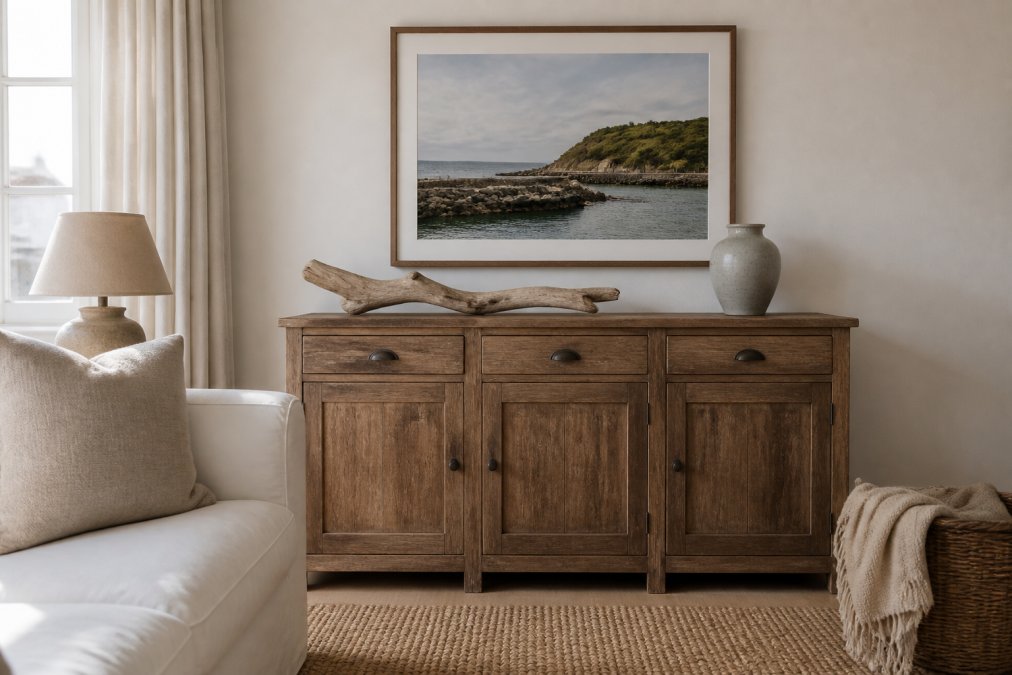
That history informs modern curation. Choosing a piece that depicts a real location, like the Lizard Peninsula, continues a tradition of visual storytelling rooted in specific places rather than generic seascapes.
Essential Elements: Wall Art, Textiles, and Vintage Tackle
The most successful schemes combine three layers: wall art as the focal point, textiles for softness, and vintage gear for authenticity. Start with the walls, where a premium archival print of a working harbour or a solitary angler sets the tone. The Winter Fishing - Mullion Cove, Lizard Peninsula, Cornwall | Premium Archival Print at £17.99 offers a museum-quality matte finish that resists yellowing, printed on acid-free paper.

Textiles ground the space. Linen cushions, wool throws, and sisal rugs in shades of slate, sand, and seafoam age gracefully and add the tactile warmth that makes a room inviting.
Vintage tackle provides the accent. A collection of antique floats in a ceramic pitcher, a hand-carved duck decoy on a shelf, or a shadow box of old flies adds heritage and a personalised touch. The key is restraint: let each piece breathe rather than clustering everything together.
Sourcing Authentic Vintage Tackle: A Practical Guide
Most decor guides tell you to use vintage tackle but never explain where to find it or how to tell genuine pieces from reproductions. Authentic items are still widely available if you know where to look.
Primary sources to consider:
- Car boot sales and flea markets, These remain the most productive hunting grounds, particularly in coastal counties like Cornwall, Devon, and Norfolk. Early morning visits yield the best results; a box of assorted floats and hooks commonly changes hands for £5-£15.
- House clearance auctions, Regional auction houses frequently lot together fishing boxes, creels, and nets from deceased estates. Online platforms like the-saleroom.com aggregate hundreds of UK auction rooms. Expect to pay £20-£50 for a mixed lot of genuine gear.
- Specialist vintage tackle dealers, A small number of dealers across the UK focus on collectable fishing memorabilia. They charge a premium but offer provenance and condition guarantees that car boot finds lack. A verified Hardy reel from the 1930s, for example, might command £200-£500 depending on condition.
How to distinguish authentic pieces from reproductions:
- Glass floats, Genuine antique floats show asymmetry, tiny air bubbles trapped in the glass, and a rough pontil mark where the blowpipe was detached. Modern reproductions are perfectly symmetrical with clean, smooth bases. Authentic colours are deep greens, ambers, and clear glass, while reproductions often appear in bright blues or reds that never occurred historically.
- Wooden floats and corks, Look for uneven hand-carving, paint that has chipped and been repainted multiple times, and evidence of saltwater wear. Genuine pieces feel light for their size because decades of drying have removed moisture. Reproductions feel denser and show uniform machine sanding.
- Hooks and lures, Authentic vintage hooks show hand-forged irregularities and often carry maker's marks stamped into the metal. Rust patterns that follow the original shape of the metal, rather than covering it uniformly, indicate genuine age.
Displaying Vintage Tackle Without Creating Clutter
The most common styling failure is treating vintage tackle as a collection to be shown all at once. A shelf crammed with floats, reels, and nets reads as hoarding rather than curation. Display pieces in small, deliberate groupings that tell a story.
A shadow box works well for flat items like flies and small lures, arranged in a loose grid or gentle arc with negative space between each piece. For three-dimensional items like floats and wooden reels, a single shelf with three to five pieces varied in height and colour creates a balanced composition. Rotate displays seasonally: keep the creel and net out for autumn and winter, then swap in lighter floats and line winders for spring and summer.
Consider the visual weight of each piece against its background. Dark, weathered wood calls for lighter-coloured floats; a white wall benefits from the warm tones of aged cork and brass. The goal is to make each item feel intentional, as though it has earned its place through both history and aesthetic contribution.
The DIY Restoration Angle: Reviving Neglected Finds
Many authentic pieces found at car boot sales arrive in poor condition, which is precisely why they are cheap. Restoring them yourself saves money and deepens your connection to the object. Restoration means stabilisation and cleaning, not aggressive refinishing that strips away patina.
For wooden floats with cracked paint, gently sand away loose flakes with fine-grit paper, then apply a thin coat of boiled linseed oil. Do not repaint the entire surface; the remaining original paint is part of the object's history. For corroded metal hooks and reels, soak them in white vinegar for 24 hours to dissolve rust, then neutralise with a baking soda paste, dry thoroughly, and apply a light coat of mineral oil (the NIH).
Glass floats rarely need more than a wash in warm soapy water; avoid abrasive cleaners, which scratch the surface and diminish value. For hemp nets and rope, brush away loose dirt with a stiff brush and air dry in a shaded spot. Never machine wash or soak netting, as this causes rot and weakens the fibres beyond repair.
Restoring a neglected piece and giving it a second life is one of the most rewarding aspects of authentic fishing culture decor. It transforms you from a consumer into a custodian of maritime heritage, guaranteeing your space contains objects with genuine stories rather than manufactured nostalgia.
Is High End Fly Fishing Home Decor Worth the Price?
High end fly fishing home decor is worth the price when it delivers archival quality, original artistry, and a genuine connection to place. Budget prints often fade within a couple of years and depict generic scenes. Premium pieces use materials designed for longevity and capture specific, evocative moments that reward daily viewing.
What Justifies the Cost of Premium Prints
The cost difference comes down to materials and artistry. A semi-gloss print on 170 gsm paper, like the Fishing at Trefussis Point - Sunny Cornwall Art Print at £14.99, offers vibrant colour reproduction and a durable 0.19 mm thickness. Archival options go further, using acid-free, pH-balanced paper to prevent the yellowing that plagues cheaper posters.

Capturing the stillness of a tidal estuary or the texture of a fishing boat hull requires an artist's eye, not a stock photo library. You are paying for that curation and for the emotional resonance of owning a scene that feels specific and true.
For a more accessible entry point, the The Old Lizard Lifeboat Station Southwest View Poster | Coastal Art Print at £9.99 delivers the same artistic vision on FSC-certified matte paper, proving that authenticity does not always demand a premium.
How to Style Coastal Decor Without Looking Kitsch
Styling coastal decor without looking kitsch requires prioritising authenticity, texture, and restraint over literal themes. The fastest route to kitsch is the wholesale adoption of a theme: shell-shaped mirrors, rope-wrapped table legs, and signs reading "Life is Better at the Beach" all scream decoration rather than design. Treat the coast as an influence, not a costume.
Integration with Modern Minimalist Design
Authentic fishing culture home decor integrates surprisingly well with modern minimalist design because both value material honesty and simplicity. In a minimalist space, a single large-format coastal print becomes the hero, providing warmth without clutter. The Lizard Lifeboat Station West View Art Print | Coastal Landscape Poster at £18.99, with its matte, non-reflective finish, suits this aesthetic perfectly.

The rules are straightforward:
- Choose a muted, earthy palette over bright primary colours.
- Limit nautical motifs to one or two hero pieces per room.
- Mix old and new: pair vintage tackle with clean, modern furniture.
- Let natural materials, driftwood, hemp rope, and linen, do the talking.
- Avoid mass-produced signs and novelty items entirely.
If you are not a serious angler but simply love the coast, this approach still works. The aesthetic is about atmosphere, not membership in a fishing club. A casual beach lover will find as much resonance in a quiet harbour scene as an avid fly fisher does.
Styling by Room: Living Spaces, Bedrooms, and Studies
Each room calls for a different intensity of the coastal theme. The living room is where you can be boldest, anchoring the sofa with a large landscape print and layering in textured cushions and a driftwood coffee table. The study or home office benefits from a more subdued approach: vintage tackle in a shadow box, a single print of a lifeboat station, and books on maritime history.
Bedrooms should lean toward calm and softness. Choose a muted seascape above the bed, pair it with linen bedding in oatmeal or slate tones, and keep accessories minimal. A guest room with a coastal theme offers visitors a sense of escape without overwhelming the senses.
The common thread across rooms is curation. A few well-chosen, high-quality pieces will always outperform a room stuffed with nautical ornaments. Consider the Winter Fishing - Mullion Cove print for a study, where its serene, contemplative mood supports focus, or the sunny Trefussis Point scene for a living room that needs warmth.
Living Room: The Bold Statement Space
The living room tolerates the strongest expression of the aesthetic because it is a social space where personality is welcome. Begin with the largest wall, typically above the sofa. A single large-format print, roughly two-thirds the width of the sofa, anchors the room. The Lizard Lifeboat Station West View Art Print | Coastal Landscape Poster at £18.99 works well here because its muted tones and horizontal composition echo the line of the sofa.
Layer textures beneath the art. A sisal rug in natural undyed jute grounds the seating area. Linen cushions in slate blue and undyed oatmeal provide softness without pattern clutter. A driftwood coffee table, either a single substantial piece or a slab mounted on metal legs, adds organic weight. If you have a fireplace, the mantel is the place for a small grouping of vintage floats or a single hand-carved duck decoy.
Lighting matters more than most guides acknowledge. Warm, low-level lighting from table and floor lamps enhances the textures of wood and linen, while harsh overhead light flattens them. Choose bulbs rated at 2700K or lower to achieve the amber glow of a harbour-side pub rather than the clinical brightness of a showroom (energy.gov).
Bedroom: Calm and Softness First
The bedroom requires a deliberate reduction in intensity. The goal is a space that feels restful, not a gallery of maritime artefacts. Choose one focal point: a muted seascape above the bed or a single textured wall in a deep tidal colour like slate grey or dark teal. Do not combine both.
Linen bedding in oatmeal, chalk, or soft grey forms the foundation. Layer a wool throw across the foot of the bed in a contrasting but harmonious tone. Curtains in heavyweight linen or cotton duck block light effectively while adding softness to the room's edges. Keep window treatments simple; elaborate valances and tiebacks introduce a formality that conflicts with the aesthetic.
Bedside tables offer the opportunity for small, meaningful objects. A single vintage glass float, a stack of maritime history books, or a small framed photograph of a working harbour adds character without visual noise. Avoid symmetry: two identical lamps and matching objects create a static, hotel-like feel. Instead, pair a table lamp on one side with a wall-mounted reading light on the other.
Study or Home Office: Focused Heritage
The study demands a different balance: enough character to inspire, but not so much that it distracts from work. A single print of a lifeboat station or a quiet harbour scene provides a visual anchor without competing for attention. Position it where you can see it while working, but not directly behind your monitor where it becomes background noise.
Bookshelves offer the best opportunity for displaying vintage tackle in a study. Intersperse a shadow box of old flies between books on maritime history and coastal navigation. A small collection of antique reels on the top shelf adds height and interest. The key is integration: the tackle should look like part of your working library, not a shrine to fishing.
Desk accessories provide another layer. A brass compass, a wooden letter opener shaped like a fish, or a paperweight made from a polished beach stone all reinforce the theme functionally. Avoid purely decorative items that serve no purpose; in a workspace, objects earn their place through utility.
Guest Rooms and Hallways: The Subtle Touch
Guest rooms and hallways present an opportunity to extend the aesthetic without committing to a full theme. In a guest room, a single coastal print above the bed, paired with white or oatmeal linen and a single driftwood accent on the dresser, offers visitors a sense of place without overwhelming them. Add a small vase of dried sea lavender or honesty on the windowsill for a subtle botanical note.
Hallways work well for a series of smaller prints arranged in a line or a loose grid, creating a gallery effect that guides the eye along the corridor. Choose prints that share a consistent palette or subject matter, such as different views of the same harbour across seasons. Vintage net floats hung at varying heights from a simple wooden rail add three-dimensional interest without taking up floor space.
The Transitional Space: Porches and Sunrooms
Porches and sunrooms bridge the indoors and outdoors, making them natural homes for the most weathered elements of the aesthetic. A driftwood bench or stool, a coil of hemp rope in a corner, and a collection of glass floats arranged on a windowsill all thrive in these spaces. Because these rooms experience more temperature fluctuation and light exposure, reserve them for items that can tolerate some wear. Save your archival prints and delicate textiles for climate-controlled interiors.
A common pattern among successful coastal interiors is the gradual intensification of the theme from private to public spaces. Bedrooms remain the most subdued, studies and hallways introduce moderate accents, and living rooms carry the boldest statements. Porches and sunrooms, being transitional, allow the most literal interpretation. Following this gradient prevents any single room from feeling overdone while ensuring the aesthetic reads coherently throughout the home.
Caring for Nautical Materials and Preserving Your Collection
Preserving your collection comes down to controlling light, humidity, and dust. Direct sunlight is the primary enemy of paper art, causing fading and discolouration over time (loc.gov). Frame prints with UV-protective glass and hang them away from south-facing windows where possible.
Vintage tackle and driftwood require different care. Metal items like old hooks and gaffs may develop rust, which can be stabilised with a light application of mineral oil. Wooden pieces should be dusted regularly and treated occasionally with a furniture wax. Hemp rope can be cleaned with a soft brush, but avoid soaking it, as this can cause rot.
For textiles, follow the care instructions carefully. Linen and wool benefit from gentle washing and air drying, and they should be rotated seasonally to prevent uneven fading. By attending to these details, your authentic fishing culture home decor will age with grace, developing a patina that only adds to its story.
| Material | Care Method | Frequency |
|---|---|---|
| Archival paper prints | Dust with soft brush; use UV glass | Monthly |
| Vintage metal tackle | Apply mineral oil to prevent rust | Quarterly |
| Driftwood and wood pieces | Dust; apply furniture wax | Quarterly |
| Linen and wool textiles | Gentle wash; air dry | Seasonally |
Conclusion: Building a Personal Connection to the Coast
The challenge of authentic fishing culture home decor is resisting the urge to overdo it. The reward is a home that feels grounded, warm, and deeply personal, a space that tells a story of the sea without shouting about it. By choosing a few genuine, hand-crafted pieces over a pile of ornaments, you create a sanctuary that reflects your own connection to the coast.
Drift and Cast was founded to help you build that connection. Our collection of premium archival prints and lifestyle goods captures specific Cornish moments, from tidal estuaries to the textures of fishing boats, with the durability and quality that make them worth keeping. Explore the full range and bring the spirit of the wild, salt-aired world into your home.
Frequently Asked Questions
What defines authentic fishing culture home decor?
Authentic fishing culture home decor moves beyond generic nautical motifs. It captures the real textures, locations, and heritage of fishing life, such as a specific Cornish cove or the weathered hull of a working boat. Look for pieces rooted in genuine places and traditions rather than mass-produced anchors and generic sailboats. The material quality matters too, archival paper prints and natural fibres age well and carry a sense of history. This grounding in a specific time and place is what separates authentic decor from themed accessories.
How can I incorporate coastal heritage into my living room?
Start with a single anchor piece, such as a large archival print of a historic harbour or lifeboat station, and let it set the tone. Choose frames in natural wood or dark metal to echo boat fittings. Then layer in textures like hemp rope, linen throws, and weathered wood to build depth. Keep the colour palette muted with greys, off-whites, and deep blues drawn from the coastline. This approach brings coastal heritage into your living room without it feeling like a themed restaurant.
Is high-end fly fishing home decor worth the price?
High-end fishing home decor justifies its price through materials, print quality, and artistic authenticity. A £17.99 archival print on acid-free paper will not yellow or fade the way a budget poster might, preserving the artwork for decades. The design work also captures a genuine sense of place, rather than a generic stock image. When you invest in a piece that reflects a real location with artistic merit, you are buying longevity and originality. For a lasting connection to the coast, the higher upfront cost often delivers better value over time.
What are some subtle ways to add fishing culture to a modern home?
Choose one or two statement pieces rather than decorating an entire room around the theme. A single framed print of a fishing boat or tidal estuary works well against clean, minimalist walls. Introduce natural materials like hemp rope, driftwood, or unbleached linen in small doses. Vintage tackle, such as a hand-carved float or a brass reel, displayed on a shelf adds heritage without shouting. The goal is to evoke the stillness of the coast through texture and colour, letting the pieces complement your existing modern interior rather than dominate it.
Get started with Drift and Cast and find the piece that speaks to your own coastal memory, whether it is a print of Mullion Cove for your study or a sunny Trefussis Point scene for your living room.