
Durable Coastal Clothing for Men: 4 Tees That Last
Table of Contents
- Quick Comparison: Four Durable Coastal Tees
- What Makes Coastal Clothing for Men Actually Durable
- 1. Short-Sleeve Unisex T-Shirt: The Lightweight Everyday Pick
- 2. Unisex Classic Tee "Fishing is a Form of Therapy": The Midweight All-Rounder
- 3. Tight Lines Charity Logo T-Shirt: Heavyweight Cotton That Gives Back
- 4. VW Corrado Project T-Shirt: Heavyweight Cotton for the Casual Wearer
- Best Coastal Fishing T-Shirts for Summer Sessions
- How to Layer for Coastal Weather Without Overheating
- Frequently Asked Questions
Last Updated: September 29, 2026
Quick Comparison: Four Durable Coastal Tees
Durable coastal clothing for men comes down to fabric weight, seam construction, and print durability after a season of salt air and UV. Drift and Cast compares four heavyweight cotton tees built for harbour walls, boat decks, and beach walks.
| Tee | Price | Fabric Weight | Best For |
|---|---|---|---|
| Short-Sleeve Unisex T-Shirt | £12.99 | 4.5 oz/yd² ring-spun cotton | Everyday wear, layering |
| Unisex Classic Tee "Fishing is a Form of Therapy" | £18.99 | 5.0-5.3 oz/yd² cotton | All-round coastal wear |
| Tight Lines Charity Logo T-Shirt | £22.99 | Heavyweight preshrunk jersey knit | Fishing sessions, charity support |
| VW Corrado Project T-Shirt | £16.99 | Heavyweight preshrunk jersey knit | Casual wear, car enthusiasts |
What Makes Coastal Clothing for Men Actually Durable
Durability in coastal clothing comes down to fabric weight, stitch quality, and how the material handles salt, sun, and repeated washing. A lightweight tee feels comfortable on day one but pills and thins quickly on the coast.

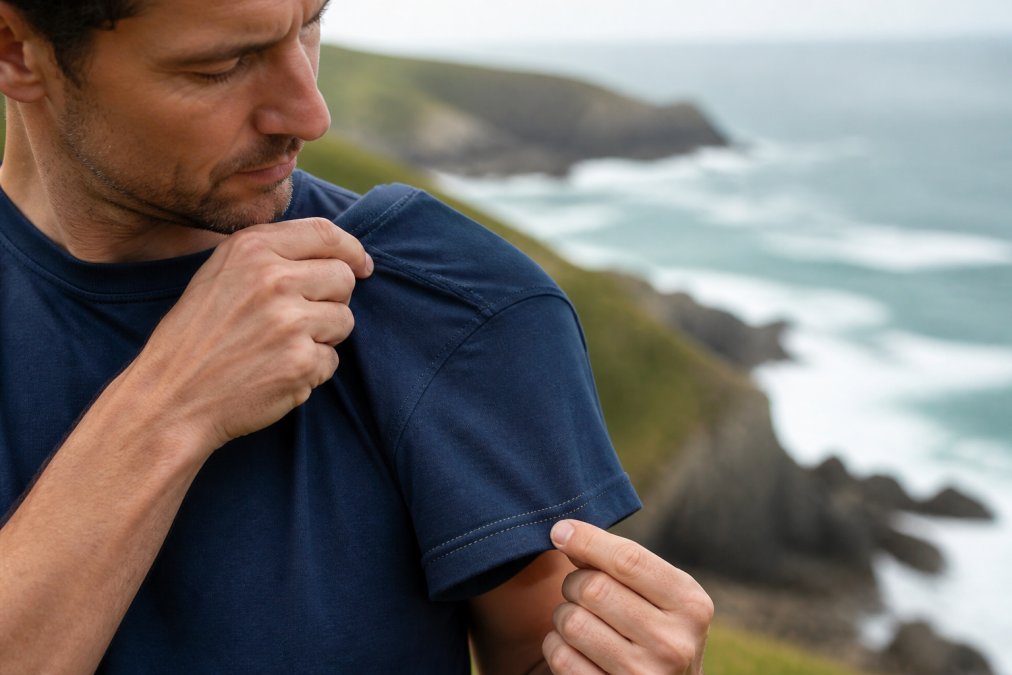
Fabric Weight and Construction
Fabric weight is measured in ounces per square yard (oz/yd²). Lighter tees sit around 4.5 oz/yd²; heavier options push past 5 oz/yd², holding more structure and resisting abrasion from boat rails, rock faces, and repeated washing.
Construction details matter just as much. Look for:
- Double-needle stitching at sleeves and hems for seam strength
- Taped neck and shoulders to prevent stretching
- Preshrunk cotton to avoid shrinkage after the first wash
- Seamless collars that keep their shape
Salt, Sun and Seam Integrity
Salt air accelerates fabric degradation, especially with UV exposure. Seam integrity is where most tees fail first: the neckline stretches, shoulder seams pull apart, or the hem unravels. Double-needle construction and taped shoulders address these failure points directly.
1. Short-Sleeve Unisex T-Shirt: The Lightweight Everyday Pick
The trade-off: at 4.5 oz/yd², it is not built for heavy abrasion. For scrambling over rocks or working on a boat, the heavier options below serve you better.
2. Unisex Classic Tee "Fishing is a Form of Therapy": The Midweight All-Rounder
The Unisex Classic Tee sits mid-range at 5.0-5.3 oz/yd², offering more structure than the lightweight option without full heavyweight bulk. At £18.99, it suits most coastal wardrobes.

3. Tight Lines Charity Logo T-Shirt: Heavyweight Cotton That Gives Back
The Tight Lines Charity Logo T-Shirt is a heavyweight preshrunk jersey knit cotton tee at £22.99, with every penny of profit going to the Tight Lines charity, durability and purpose combined.

4. VW Corrado Project T-Shirt: Heavyweight Cotton for the Casual Wearer
The VW Corrado Project T-Shirt brings automotive culture into the coastal wardrobe. At £16.99, it is a heavyweight preshrunk jersey knit cotton tee with original Drift and Cast artwork celebrating the Corrado.
Best Coastal Fishing T-Shirts for Summer Sessions
Summer coastal fishing puts specific demands on a tee: UV exposure, salt spray, sweat, and abrasion from rod butts, tackle boxes, and boat gunwales. Most guides recommend the same shirt for a harbour wall session and an offshore trip, they are not the same problem.
Match the Tee to the Session, Not the Season
| Session type | Typical exposure | Fabric priority | Weight sweet spot |
|---|---|---|---|
| Beach or pier, short session | Sun, sand, light spray | Breathability, UV comfort | 4.5-5.0 oz/yd² |
| Harbour wall or estuary | Sun, wind, occasional spray | Structure, wind resistance | 5.0-5.3 oz/yd² |
| Boat, inshore | Spray, abrasion, sun | Abrasion resistance, quick dry | 5.3 oz/yd²+ or synthetic blend |
| Boat, offshore | Sustained spray, wind, sun | Quick dry, layering compatibility | Synthetic or merino base, not cotton |
A heavyweight cotton tee is excellent for a beach, pier, or harbour session, and the wrong choice offshore, where it will get soaked and stay soaked.
What to Look For in a Summer Coastal Tee
Fabric weight. For warm-weather coastal use, 4.5-5.3 oz/yd² is the practical range. Lighter thins quickly under abrasion; heavier gets too warm unless you are stationary.
UV and Salt: The Two Things Summer Coastal Wear Has to Survive
UV exposure. Cotton offers limited UV protection, a standard white cotton tee has a UPF of roughly 5-10, well below the UPF 50+ benchmark. Darker colours, tighter knits, and heavier fabrics increase UPF. In strong summer sun, pair a cotton tee with a hat, sunscreen, and a UPF-rated long-sleeve layer.
The Four Tees, Matched to Summer Sessions
- Short-Sleeve Unisex T-Shirt (£12.99, 4.5 oz/yd²): the lightest option. Best for beach and pier sessions in peak summer, and as a base layer under a shell on breezy evenings. Not built for abrasion.
- Unisex Classic Tee "Fishing is a Form of Therapy" (£18.99, 5.0-5.3 oz/yd²): the strongest all-rounder for summer fishing. Tubular construction, taped shoulders, and enough weight to hold structure through a full day on the bank.
- Tight Lines Charity Logo T-Shirt (£22.99, heavyweight preshrunk jersey): the pick for longer sessions and cooler summer mornings, with the added benefit of supporting the Tight Lines charity.
- VW Corrado Project T-Shirt (£16.99, heavyweight preshrunk jersey): the same construction as the Tight Lines tee, aimed at the casual coastal wearer rather than the dedicated angler.
A Note on Synthetic Performance Tees
If your summer fishing involves sustained spray, sweat, or offshore work, a synthetic performance tee outperforms cotton: it dries faster, wicks moisture, and holds less water. The trade-off is odour retention, synthetics pick up smells faster and need more frequent washing. The practical answer: cotton for shore and pier sessions, synthetic or merino offshore.
How to Layer for Coastal Weather Without Overheating
Layering for coastal weather means building a system that manages moisture, wind, and spray in that order, not simply stacking a tee, a fleece, and a shell. Coastal conditions change fast: a sheltered harbour wall can feel 4-5°C warmer than an exposed headland a mile away, and a 15-20 mph sea breeze strips heat from any damp layer. The system must be adjustable in minutes.
The Three Jobs a Coastal Layering System Has to Do
- Move moisture away from skin. This is the base layer's only real job. If it holds water, every layer above it becomes useless.
- Trap warmth without trapping sweat. Mid layers should be breathable enough to dump heat when you are walking to the mark and warm enough when you stop.
- Block wind and spray. The outer layer is a barrier, not insulation. It should be windproof and at least water-repellent, with taped seams if you expect sustained rain.
Base Layer: Match the Fabric to the Intensity
This is where most coastal wardrobes go wrong. Cotton is comfortable and durable but holds water and loses insulation value when wet. For low-intensity coastal activity (beach walks, pier fishing, harbour cafés), a heavyweight cotton tee in the 5.0-5.3 oz/yd² range is fine under a shell. For anything sweatier or wetter, switch to:
- Merino wool (150-200 gsm): naturally odour-resistant, regulates temperature across a wide range, still insulates when damp. Best for cool-weather coastal walking and autumn fishing.
- Polyester or polypropylene base layers: fastest drying, best moisture movement, cheapest. Best for summer sessions and high-output activity.
- Cotton-synthetic blends: a 50/50 or 65/35 blend dries faster than pure cotton but still feels like cotton against skin.
Mid Layer: Insulation You Can Shed
The mid layer should be the most adjustable part of the system. Options, lightest to warmest:
- Microfleece (100-200 gsm): light, fast-drying, cheap. Good for summer evenings and shoulder seasons.
- Grid fleece: the same warmth as standard fleece at roughly two-thirds the weight, because the grid pattern traps air while letting vapour escape. A strong pick for active coastal use.
- Merino jumper: warmer per gram than fleece, less bulky, but slower to dry and more expensive.
- Synthetic insulated jacket (e.g. PrimaLoft-style fill): warmest option, still insulates when damp, packs down small. Best for winter shore fishing and cold-weather sailing.
Outer Layer: Wind and Spray Protection
The outer shell separates a coastal layering system from an inland one. Look for:
- Windproofing: a tightly woven or membrane fabric. Even a 15 mph wind pulls heat out of a damp mid layer.
- Water resistance: a durable water-repellent (DWR) finish sheds light spray and drizzle. It is not waterproof, DWR needs re-treating as it wears off.
- Waterproof and breathable membranes: for sustained rain or offshore use. Look for taped seams, a storm flap over the zip, and adjustable cuffs and hem.
- Hydrostatic head rating: how much water pressure a fabric resists before leaking, in millimetres. Roughly: 1,500 mm handles light rain, 5,000 mm steady rain, 10,000 mm+ sustained heavy rain and spray. For coastal fishing and sailing, 10,000 mm or higher is a sensible target.
- Breathability rating: in g/m²/24h. 5,000 g suits low activity; 10,000-20,000 g suits active use.
A Practical Coastal Layering Formula
| Conditions | Base | Mid | Outer |
|---|---|---|---|
| Warm, dry, light breeze | Lightweight cotton or polyester tee | None | None, or a packable windshell |
| Mild, breezy, chance of spray | Polyester or merino base | Microfleece | Windproof, DWR-treated shell |
| Cool, wet, exposed | Merino base | Grid fleece or synthetic insulated jacket | Waterproof shell, 10,000 mm+ |
| Cold, wet, offshore | Merino or synthetic base | Synthetic insulated jacket | Waterproof shell with taped seams, plus waterproof trousers |
Adjust Before You Overheat
Get the base layer right and the rest falls into place. A quality heavyweight cotton tee is a fine foundation for mild coastal days; for anything wetter or windier, build around merino or synthetics and treat the shell as the barrier it is meant to be.
Frequently Asked Questions
What features should I look for in durable coastal clothing?
Focus on fabric weight, seam construction and print method. Heavier cotton (5.0 oz/yd² and above) holds shape through repeated washing, while double-needle hems and taped neck and shoulder seams resist the stress of movement. Preshrunk jersey knit reduces shrinkage after washing. For coastal clothing, also check that the design is printed to order rather than heat-pressed onto a thin blank, as this tends to hold up better over time.
What are the best coastal fishing t-shirts for summer?
For warm-weather sessions, a lightweight ring-spun cotton tee works well because it breathes and dries quickly between casts. The Short-Sleeve Unisex T-Shirt at £12.99 is a solid entry point with double-stitched neckline and sleeves. If you want more structure, the Unisex Classic Tee at £18.99 uses 5.0-5.3 oz/yd² fabric with taped shoulders. Both are printed to order, so allow a little extra time for delivery.
How do I layer for coastal weather without overheating?
Start with a moisture-wicking base layer against the skin, then add a midweight cotton tee, and finish with a windproof or waterproof shell you can remove when the sun comes out. Coastal temperatures shift quickly, so choose pieces you can take off and tie around your waist. A heavyweight cotton tee like the Tight Lines Charity Logo T-Shirt at £22.99 works well as a mid layer because the preshrunk jersey knit holds its shape under a jacket.
Are there sustainable options for durable coastal apparel?
Print-on-demand production is one of the more straightforward sustainability choices in apparel because items are made to order rather than mass-produced and warehoused. Drift and Cast prints every piece on demand, which reduces overproduction and dead stock. The Tight Lines Charity Logo T-Shirt goes further: all profit from that item goes to the Tight Lines charity. Choosing heavyweight cotton that lasts several seasons also reduces how often you replace worn-out garments.
How do I maintain the print and fabric on coastal clothing?
Machine wash cold with similar colours and either tumble dry low or hang dry. High heat is the main cause of print cracking and cotton shrinkage, so keep the dryer setting low or skip it entirely. Wash garments inside out to protect the printed surface from abrasion. If you fish regularly, rinse salt spray from clothing before washing, as dried salt can stiffen fabric over time. Storing tees folded rather than hung also helps them keep their shape.
Choosing durable coastal clothing for men comes down to understanding fabric weight, seam construction, and how a garment handles salt, sun, and repeated washing. Drift and Cast builds heavyweight cotton tees that hold their shape and print through seasons of coastal wear. Explore the full range of coastal apparel and find the tee that matches how you spend your time by the sea.