
Seasalt Cornwall vs Coastal Lifestyle Company: 2026 Guide
Table of Contents
- Seasalt Cornwall vs Coastal Lifestyle Company: What to Compare
- Brand Identity and Coastal Inspiration
- Seasalt Cornwall Clothing Review: Range, Quality and Value
- Seasalt Cornwall Sizing and Fit: What Shoppers Report
- Coastal Lifestyle Clothing Brands: How to Tell Them Apart
- Fishing-Inspired Apparel for Men: Where It Fits In
- Price, Materials and Sustainability Compared
- Verdict: Which Coastal Brand Suits You?
- Frequently Asked Questions
Last Updated: October 5, 2026
Seasalt Cornwall vs Coastal Lifestyle Company: What to Compare
Comparing Seasalt Cornwall vs Coastal Lifestyle Company comes down to one question: are you buying a coast-inspired look, or a piece of the coastline itself? At Drift and Cast, we build our work around the second answer, and that shapes everything we sell.
Below, we show you exactly how to tell the two apart, what the price gaps mean in practice, and where a print or a mug might serve you better than another striped top.

Brand Identity and Coastal Inspiration
Seasalt Cornwall is a clothing and lifestyle retailer built on Cornish maritime heritage. Its identity is literal: garments named after coves, harbours and fishing villages, sold through a national store network and a large online shop.
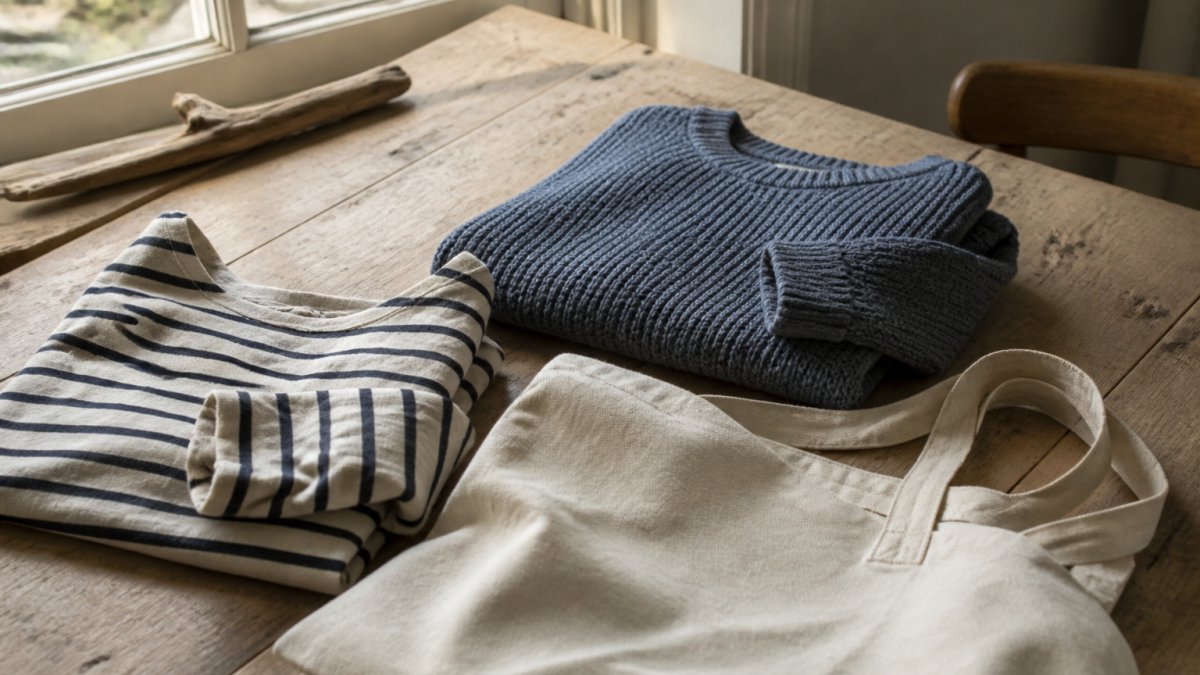
That distinction matters more than it sounds. A brand built on a whole coastline can style anything; a brand built on one place has to get that place right.
What this means for buyers
If you want a garment that signals coastal style without committing to a location, the bigger clothing labels deliver that. If you want a piece that only makes sense if you know the view from The Lizard at dusk, that is a narrower brief, and fewer brands attempt it.
Seasalt Cornwall Clothing Review: Range, Quality and Value
The honest read on Seasalt Cornwall clothing is that the range is broad and the aesthetic is consistent.
Quality is where opinions split. The materials are chosen for a soft, natural feel and everyday comfort rather than technical performance. That suits daily wear in a coastal climate. It does not suit anyone expecting expedition-grade durability.
Value depends on what you are buying. A jersey top at a mid-market price is fair.
Seasalt Cornwall Sizing and Fit: What Shoppers Report
Sizing is the single most common complaint in coastal clothing reviews, and Seasalt Cornwall sizing and fit is no exception. The pattern that emerges from customer feedback is not that the brand runs small or large overall, but that it runs inconsistently between ranges.
That is a fit mechanism, not a mystery. Jersey is a knit fabric with natural stretch, so it skims and recovers. Lambswool and cotton knitwear are denser and less forgiving, so they hold their shape and expose any tightness across the shoulders or chest.
What to check before you order
- The specific product's measurement table, not the brand's general size guide. Look for chest, waist and length in centimetres, and compare them to a garment you already own and like.
- The composition label. A high cotton or wool content behaves differently after washing from a blend with elastane or viscose. Blends can relax or pill in ways the marketing copy will not mention.
- Reviews for that exact item, filtered to reviewers who state their height and usual size. A review that says "I'm 1.63m and usually a 12, and the 12 was roomy" is worth more than ten reviews that just say "lovely top".
- The returns window and who pays return postage. This is the practical brake on ordering multiple sizes to try at home. A free return makes a two-size order sensible; a paid one can add several pounds to the cost of finding your fit.
| Garment type | Common sizing feedback | What to do |
|---|---|---|
| Knitwear | Runs differently to jersey; denser fabrics expose tightness across shoulders | Size per garment; check chest and length in cm |
| Jersey tops | Generally true to size; stretch fabric skims the body | Order your usual size unless reviews say otherwise |
| Outerwear | Fit varies by cut; sized to layer over clothing | Check the specific measurements and layer allowance |
| Footwear | Width matters more than length for many shoppers | Read reviews for width notes before ordering |
How this compares with a place-specific maker
A clothing retailer has to solve fit across dozens of styles and thousands of customers, which is why the size chart is a starting point rather than an answer. A place-specific maker selling prints and homeware sidesteps the problem entirely: a poster is ordered in a fixed size, and a mug is a mug. If fit risk is the thing putting you off buying online, that is a genuine reason to spend your money on wall art or homeware instead of a garment you cannot try on.
Coastal Lifestyle Clothing Brands: How to Tell Them Apart
Coastal lifestyle clothing brands fall into three groups, and knowing which one you are looking at saves a lot of wasted browsing.
- Heritage retailers: built on a real place, with a store network and a full clothing range
- General coastal labels: coast-inspired styling with no single location behind it
- Place-specific makers: small brands tied to one stretch of coast, often selling art and homewares alongside apparel
The first group gives you choice and consistency. The third gives you specificity, and usually a smaller range.
Drift and Cast sits firmly in the third group. We are not trying to dress you head to toe. We make coastal art and lifestyle pieces, from a Kynance Cove fine art poster at £17.99 to a ceramic mug at £14.99, each tied to a real view rather than a mood board.

Fishing-Inspired Apparel for Men: Where It Fits In
Fishing-inspired apparel for men is the weakest part of most coastal ranges.
Ceramic Sunset Mug – Vibrant Design of Mounts Bay West Cornwall →
That is where the two approaches genuinely diverge. If you want a jacket that reads as coastal, the clothing retailers have you covered. If you want something that reads as fishing culture, the options thin out fast.
Our own answer is not more garments. It is homeware and wall art that carries the fishing reference properly: boat textures, tidal estuaries, the working shoreline.
Price, Materials and Sustainability Compared
Price is the clearest dividing line, and it is also where most comparisons stay vague. A like-for-like method fixes that: compare what a typical spend buys, what decides whether it lasts, and what happens at the end of its life. The two categories are not competing for the same pound, so the honest comparison is value-per-use, not headline price.
What a typical spend buys
A coastal clothing purchase from a heritage retailer is a mid-market outlay. In practice that means a jersey top sits in the tens of pounds, a knitwear piece sits higher, and a coat sits higher again.
| What you are buying | Typical price band | What decides quality | Best for |
|---|---|---|---|
| Coastal clothing | Mid-market (tens of pounds per garment) | Fabric composition, fit, construction, wash care | Everyday wear |
| Fine art print | £8.78-£17.99 | Paper weight, print method, colour fastness | Wall decor, gifting |
| Ceramic mug | £14.99 | Ceramic quality, print durability, dishwasher safety | Daily use, gifting |
The value question is not which is cheaper. It is which earns its keep. A £14.99 mug used every morning for a year costs a few pence per use. A mid-market knitwear piece worn twice a season costs far more per wear, however good the wool is.
Materials: what actually decides longevity
Materials differ in kind, not just in cost, and the failure modes are different.
- Apparel lives or dies on fabric composition and wash care. Natural fibres such as cotton and wool feel better and breathe, but they can shrink, pill or lose shape if washed at the wrong temperature. Blends with elastane or viscose add stretch and drape but can relax over time. The composition label and the wash-care symbol are the real quality signals, not the marketing copy.
- Prints live or die on paper weight, print method and colour fastness. A heavier, archival-grade paper with pigment inks holds colour far better than a thin poster printed on a desktop inkjet. If a print is going on a wall in daylight, colour fastness matters more than anything else.
- Ceramics live or die on the glaze and the print durability. A mug that is dishwasher and microwave safe will outlast one that is hand-wash only, because it will actually be used the way people use mugs.
Sustainability: what can be verified
Sustainability claims are easy to make and hard to check, so the useful move is to separate what is certified from what is asserted.
- Paper sourcing. FSC certification is a recognised scheme for responsible forest management (Forest Stewardship Council(https://fsc.org/en)). It tells you the paper comes from a certified supply chain, not that the whole product is carbon neutral. For broader context on what certified paper actually guarantees, see the FSC certification standards(https://fsc.org/en/standards).
- Print on demand. Printing to order means no unsold stock is held, discounted or binned. That reduces waste compared with a model that overproduces and clears the remainder in a sale. It does not eliminate the environmental cost of shipping, so it is a partial advantage, not a total one.
- Clothing supply chains. A heritage retailer sourcing fabric and manufacturing at scale has a more complex footprint than a small print studio, and its published policies are the place to check rather than a general impression of the brand.
Verdict: Which Coastal Brand Suits You?
Pick a heritage coastal clothing brand if you want a full wardrobe of coastal style and you are happy to pay mid-market prices for it. That is what those retailers are built to do, and they do it well.
Pick Drift and Cast if what you actually want is the coast itself: a specific view, a specific moment, on your wall or in your hands. Our prints start at £8.78 on FSC-certified paper, our mugs are microwave and dishwasher safe, and every design comes from original photography of real places.
Frequently Asked Questions
Is Seasalt clothing frumpy?
Seasalt has built a following on relaxed, comfortable cuts rather than trend-led fashion. Shoppers who prefer loose-fitting, natural-feel garments often find the range flattering, while those wanting sharper tailoring may look elsewhere. Fit varies by collection, so checking the size guide and customer reviews before ordering helps you judge whether the silhouette suits your style.
Who is Seasalt aimed at?
Seasalt's core audience is adults who value coastal style, comfortable everyday wear, and quality materials. The womenswear range dominates, with knitwear, soft jersey tops, and maritime-inspired prints. Menswear and accessories exist but are smaller. If you want a full family wardrobe of coastal lifestyle clothing, you may need to supplement with other brands.
How does Seasalt Cornwall compare with Coastal Lifestyle Company?
Seasalt is a larger, well-known Cornish clothing brand with a broad womenswear range and a national retail presence. Coastal Lifestyle Company is a smaller operation focused on coastal-inspired homewares and gifts alongside apparel. The right choice depends on whether you want a full clothing wardrobe or curated coastal decor and accessories.
What should you compare when choosing coastal-inspired clothing?
Focus on four things: fabric quality and how it wears over time, fit and sizing, whether the range covers your needs (womenswear, menswear, accessories), and the brand's sourcing and sustainability claims. Customer reviews and returns policies reveal more about real-world performance than marketing copy, so read both before committing.
How can you tell whether a coastal clothing brand suits your style?
Look at the patterns and palette: nautical-inspired stripes and florals suit classic coastal style, while earthy, muted tones lean more towards a modern maritime aesthetic. Check whether the brand's lookbook matches your wardrobe. If you want authentic Cornish coast imagery rather than generic seaside motifs, independent brands often deliver more specific, place-rooted design.
The hard part is not choosing a brand. It is finding coastal pieces that feel like somewhere real rather than a generic seaside theme. That is the whole reason Drift and Cast exists: original photography from The Lizard, Mounts Bay and Gwithian, printed on demand on FSC-certified paper, plus practical homeware built to be used daily. Browse the collection and bring a piece of the coastline home.